Showing posts with label slavery. Show all posts

Monday, March 20, 2023

The Violin Conspiracy


 Brenda Slocumb is the author of the autobiographical fiction, The Violin Conspiracy. Fictional Ray loves playing the fiddle, much to his mother's consternation. She'd like nothing more than for Ray to get a job at a hospital cafeteria making minimum wage, helping to support the family. Ray, however, has a dream to be a professional musician. The only one who supports him in this dream is his grandmother.

His grandmother gifts him her grandfather's beat-up fiddle which turns out to be a priceless Stradivarius! Ray was a talented violinist but knowing that this the violin his grandfather played gives him a special spark. 

Ray is recruited to attend college on a music scholarship by a professor who does all she can to show him that his dream makes sense. She helps him conquer the racism that beleaguers the music world. Ray - and his Strad - take the music world by storm.

He's all set to compete in the Tchaikovsky Competition, the Olympics of classical music, when his violin is stolen from his case, with a ransom note - and a sneaker - in it's place. Ray suspects either his family - or the family that owned his great-great-grandfather when great-great-grandfather was a slave. But could it be someone else?

Slocumb cleverly knits the story together, taking us back in time. Will Ray every find his violin?

The novel allowed me to explore things I'd never thought of before, mostly involving race and being a musician as a career. I never really warmed up to Ray as a character, though. Is that why I only gave this one 3-stars on goodreads? Perhaps.

Thursday, February 16, 2023

Horse


I'm a big Geraldine Brooks fan. In the past (pre-dating this blog), I've enjoyed her novels: Year of Wonders, March, People of the Book, and Caleb's Crossing as well as her memoir, Foreign Correspondence: A Pen Pals Journey from Down Under to All Over. When her latest, Horse, was released, I was in no rush to read it. Even after I kept seeing recommendation after recommendation. I mean... I don't love horses. Even after I heard it was about so much more than just horses, I wasn't getting my name on library waitlists. Until I finally took the plunge. After waiting about 16 weeks, the book became available.

I had a hard time getting into Horse. There were three timelines told from multiple perspectives. Some chapters were short, some were very long. But the novel did capture my attention early on. I wanted to learn what happened to Jarret, Darley (later Lexington), Jess and Theo. So kept on reading.

The book is too complex for me to give you a synopsis. Check out goodreads or the publisher's website for that. There were so many themes. Art. Thoroughbred breeding and racing. Slavery. Racism. Self-discovery.

Brooks excels at developing all the characters, not just the main characters, so you really do care about each one, even if you don't like them and it's only to care about what happens to them.

After reading two books dealing with serious racism, I think I need a break. Maybe it's time to read a rom-com?


Monday, October 10, 2022

The Thread Collectors

I really enjoyed listening to The Thread Collectors by Shaunna J. Edwards and Alyson Richman. Had the story gone a little bit deeper, I think I would have loved it. That being said, it was an excellent story told in an effective way. I highly recommend it. It was too new to select as a book for my synagogue book club, but at some point I'm hoping we can discuss it.

The authors, Edwards and Richman, tell the story of the Civil War from perspectives we don't often hear from. William is a fugitive slave who enlists in the Union Army where he meets Jacob, a Jewish musician from New York, who is a musician in the Union Army. Through their chance meeting, William's experience in the war is very different from what it might have been had they not met.

Both men have left loves behind. William leaves Stella, a slave to the same master, back in New Orleans while Jacob leaves his wife, Lily, in New York City. While the men communicate with the world thru their music, the women have different ways of communicating. After Stella hand stitches a map to help William escape in order to join up, women on her street ask her to stitch maps for their loved ones. Lily shares her thoughts through her written words. She volunteers in New York City, trying to make a difference to the war effort. She writes articles for an abolitionist newsletter and is part of an organization of suffragettes. To make an early connection between Lily and Stella, Lily is part of a quilting bee even though as a motherless girl, she never learned how to quilt. Or sew. Or knit.

This isn't exactly a spoiler, but at the end of the novel, the authors' note indicates which parts of the story are based on facts from the authors' families' stories and which parts of based on historical research. I'm can't stop thinking about the connections.
 

Wednesday, May 12, 2021

Kindred


Of course, I've heard about Octavia Butler but I'm surprised she never really registered with me before. Then again, she's known as a science fiction writer and if you've known me for any length of time, you know that science fiction isn't really a genre I gravitate towards. My daughter kept raving about Kindred so I looked more closely at the synopsis and thought, "Oh, that sounds interesting!" Now I need to take a closer look at what else this author has written as I really enjoyed her writing style and her storytelling.


Here's the synopsis from goodreads. It will give you an idea of what I thought might be interesting to me.

The first science fiction written by a black woman, Kindred has become a cornerstone of black American literature. This combination of slave memoir, fantasy, and historical fiction is a novel of rich literary complexity. Having just celebrated her 26th birthday in 1976 California, Dana, an African-American woman, is suddenly and inexplicably wrenched through time into antebellum Maryland. After saving a drowning white boy there, she finds herself staring into the barrel of a shotgun and is transported back to the present just in time to save her life. During numerous such time-defying episodes with the same young man, she realizes the challenge she’s been given...
I've read my fair share of slave narratives, both fictionalized and non-fiction. In Kindred, however, the time travel aspect and first person narrative pull you into the story in a way that other somewhat similar books have. It allowed a contemporary telling of a story of days gone by. That made for a very interesting twist.

The character development is so rich. Issues of race are handled differently in other books that I've read. Butler really delves into our shared slavery history - that of black Americans and white Americans - which adds yet another dimension.

Kindred  is definitely a worthwhile read.


Tuesday, August 18, 2020

The Book of Negroes

 Since being "safer at home," I've mostly been reading e-books. So when a neighbor dropped off this book that she thought I might enjoy, I decided to save it for my beach vacation knowing I'd want to read outside... and that my iPad isn't the greatest way to read books out in the sunlight. I'd never heard of the book but was assured by my friend that I'd like it.

Someone Knows My Name is an older historical novel by Lawrence Hill. After reading it, I am surprised that I'd never come across this novel before. It's the story of Aminata, an 11-year old African girl, kidnapped from her homeland by slavers in the mid-1700s. She is marched over many months to coastal Africa from her home further inland where she is put on a slave ship headed towards South Carolina. She started out as a slave on an indigo plantation, eventually gets traded to an administrative type in the indigo industry. She ends up in New York City during the Revolutionary War, and then gets rewarded for her service to the king of England with passage to Nova Scotia and hope for a fresh start. Life continues to be hard and full of prejudice. Meena agrees to join with British abolitionists who are determined to create a colony in Africa, Sierra Leone, which former slaves can become "adventurers" and experience freedom for the first time. 

Meena, feeling like she'd lost everything that was every important to her decides that going to Sierra Leone will be her opportunity to go home. The home that she's longed for since she was first kidnapped many years earlier. Home is not exactly what she imagined, but she and the abolitionists realize the importance of Meena telling the story of her life. That brings her from Africa to England.

This is a sweeping saga in the life of a fictional slave. It was exceptionally told. It wasn't so much a novel about slavery as about the life of this one fictionalized woman. But I was either made aware of things in the history of slavery that I wasn't familiar with or that I'd forgotten all about. I'd highly recommend this novel.

Saturday, July 18, 2020

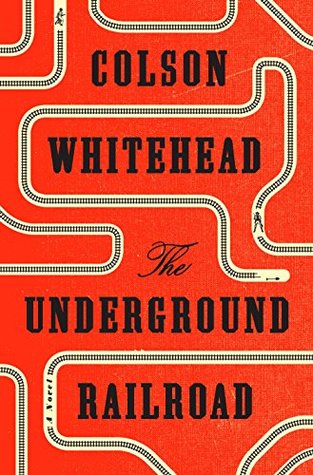
The Underground Railroad

I guess I hadn't read any of the reviews about Colson Whitehead's Pulitzer Prize winning novel, The Underground Railroad. I had no idea what to expect, but when I noticed I had the book on my shelf, I decided it was probably an important book to read now.

The Underground Railroad isn't the usual historical fiction depiction of a horrendous time in our country's history. In this novel, the Underground Railroad is an actual railroad, with platforms, tracks and different sorts of passenger accommodations. I found that off-putting. Each and every time Cora, the runaway slave from Georgia, was at a station, I'd kind of scratch my head. I think I wish I'd read the blurb before starting the book so I would have known at least this!

Whitehead goes further to imagine different realities for the  runaway slave as she makes her way north. In South Carolina, North Carolina, Tennessee, and finally Indiana. As soon as I turned the last page, I started researching whether some of the things Whitehead includes were realities. Much of the "history" in this novel is speculative. What if...

I found his language mostly brilliant, but the story didn't flow in one smooth path. He'd interrupt the story while jumping back in time to fill in backstory for one of the secondary characters. Once I realized that this was what he was doing, I was okay with it and it didn't disrupt my reading process terribly. But until I did, I found it distracting. The book took me a long time to finish, probably because I was reading from a paper-and-ink book, so I'd lose the plot a bit and have to turn back and reread.

It might sound as though I didn't really like this book. And I'm not sure that I did. But I did like the way Cora's story made me think. It made me think about what I already know about the Underground Railroad. It made me think more about what the journey north might have been like. It made me think more about what Cora's future might have been like. And it makes me think of the progress, or lack thereof, towards racial equality that our country has undergone. The details of this novel might not stick with me long, but the thinking that it pushed to the front of my brain will stick with me for a long time to come.

Toward the end of the novel, this quote really struck a chord.
"And America, too, is a delusion, the grandest one of all. The white race believes - believes with all its heart - that it is their right to take the land. To kill Indians. Make war. Enslave their brothers. This nation shouldn't exist, if there is any justice in the world, for its foundations are murder, theft, and cruelty. Yet here we are."
Yes, here we are. Whitehead started this novel in 2000, worked on it for 16 years, published in 2016. Four years later, in the summer of 2020, that quote is more timely than ever.

Thursday, April 9, 2020

America's First Daughter

America's First Daughter reminded me of the family sagas that I used to enjoy reading. But this wasn't just some fictional family saga. Authors Stephanie Dray and Laura Kamoie did years of research to write the factually based family history of the Jefferson family. The Thomas Jefferson family.

But unlike most factual stories about our third President, Thomas Jefferson, this story was told from the perspective of his oldest daughter, "Patsy" Jefferson.

Both Patsy and her father made deathbed promises to Patsy's mother. Jefferson promised to never find another wife and Patsy promised to take care of her father and ... to be happy.

This fairly hefty novel is full of American history, tales of the French revolution, family drama, politics and other alliances. Ever since I first heard the story of Sally Hemings, Thomas Jefferson's slave mistress, I was intrigued. On that point, this story did not disappoint.

What I did struggle with was the language the authors used. It was written in what I guess they approximated to be the language of the times. So some of it was tedious and it definitely made for a much slower read. Did it ring more true written in this style? Perhaps. But I think I might have preferred that the authors stuck to this type of language only when writing dialogue - which they said often came straight from a collection of Jefferson's letters - and used more everyday language for the narrative.

I was reminded again about how little I understand about the French revolution but reinforced all I've learned (more recently) about the close relationship between our democracy here in the United States and the democracy in France.

Now I'd like to get back to Monticello, a place I only visited as a small child. Maybe if we're ever able to take our planned drive up to New York, we can stop there on the way up or on the way home.

If you're a fan of historical fiction and you like big fat books, you might like this one.


Friday, April 26, 2019

Homegoing

Yaa Gyasi's historical fiction novel, Homegoing, takes an interesting approach to the history of slavery. Gyasi follows two half-sisters who are only remotely aware of each other and their descendants over 8 generations. One sister marries an Englishman who is an officer in the slave trade living a life of luxury in "The Castle." The other sister is imprisoned in the lower level of "The Castle," eventually sold into slavery in America.

In Africa, we learn more about the Asante and Fante nations fighiting under British colonization about the eventual independence of Ghana. In the United States, we learn about the journey from the plantation to the days of the Civil War, to the early days of freedom in the coal mines. The great migration takes place and now the descendants are in Harlem. Eventually the story moves to the present day.

The history was horrific, the story was interesting, but the novel was more like a collecction of short stories rather than a family saga. There was very little connection from one generation to the next other than a casual mention of recent ancestry. I think the novel would have gotten way too long and way too involved had it been more of a saga, but I think it would have been a more satisfying read.

This is a book that will be discussed in October in my community book club. The individual characters are unmemorable so I hope I can recall enough about the novel to be able to meaningfully discuss it at that time.

Would I recommend? Yes. I would.

Saturday, September 16, 2017

I finally finished Beloved (with update after Books & Beer Club discussion)

Yes, I finally finished Toni Morrison's Pulitzer Prize winning novel, Beloved. Yes, I did say finally. I didn't love Beloved. I certainly didn't hate it. Who knows. Maybe I did. I found it an extremely difficult book to read, in so many different ways.

In case you have no idea what Beloved is about.... I had no idea what it was about even though I've seen it on so many lists of books a serious reader needs to read... it's a story that takes place in Ohio and bounces around the years leading up to the Civil War and then maybe 10 years after. It's the story of Sethe, a runaway slave, who is the mother of 4 children. There's her 18-year old daughter named Denver who lives with her. She had two older sons who left home and she has no idea where they are. The fourth one, a girl slightly older than Denver, died (no spoiler, we learn this pretty early in the story). Sethe didn't have enough money for the inscription on the girl's gravestone. She had just enough to get "Beloved" engraved on the stone.

Unlike most slaves, Sethe's last owners at Sweet Home were kind. They allowed her to "marry" a fellow slave, Halle. As is rare with slaves, all 4 of her children had the same father. Her owner never had his way with her. The slaves that were the property of the Garners were treated pretty fairly or as fairly as slaves might be treated. Halle was able to work outside and buy his mother's freedom for her. Until Mr. Garner died and Mrs. Garner sends for a relative referred to as "schoolteacher" to run the place and who is the complete opposite of kind. The slaves talk about running away, they make a plan. In the end, Sethe sends her three children alone with someone to her mother-in-law in Ohio. She follows shortly behind, giving birth to Denver with the assistance of a white woman while she is in the process of escaping. That's probably enough of a recap of the story without giving too much away.

I still haven't reviewed Beloved on goodreads.com. I have no idea how many stars I feel that it might deserve. I have, however, read through many of the reviews online since finishing yesterday. Based on reviews, Beloved is the type of book that people either love or hate. It's got a lot of 5-star reviews and a lot of 1-star reviews. I honestly don't know how I felt about the book.

Things I do know:
  • The picture painted of slavery and of being a free black in the north is probably one of the most horrific that I've ever read. And I've read a lot of books about slavery and the time leading up to and after the Civil War. This was gut wrenching, stomach churning and frightful beyond words. I'm surprised I didn't have nightmares.
  • Toni Morrison might be this amazing writer but I found her writing very slow to get through. Especially once the story went from being a narrative to a collection of words (stream of conscience??) somewhere in the middle of the book. The narrative was difficult to follow and I found myself reading the same words over an over. When it was no longer a narrative, I just kind of flew through that section since what was the point in struggling over what Morrison was trying to tell me? Then it goes back to being narrative. Maybe I got used to her writing. Or I figured out a way to make sense with it. I finished that chapter more quickly than the first two.
  • Because of the previous two points, no matter how much time I had to read on a given day, I couldn't read more than a few pages. The atrociousness of the tale combined with the difficult language (not the individual words but rather the way Morrison strings words together in sentences and paragraphs) made it a book that I couldn't lose myself in.
  • I don't like books that are over 300 pages long and only have three chapters. I felt like there were no ending points, no obvious places where it made sense to take a break.
  • I kind of lost track of who some of the peripheral characters were. 
  • I was confused about whether a few characters were white or black. Ordinarily that wouldn't make a difference but in a book about a runaway slave and free blacks, I think it probably was more important than in most other stories.
  • I know that the book club discussion about the novel will be a good one. We'll be able to talk about the characters, the plot, the "fantasy" aspect of the storyline and about Toni Morrison's way with words.
  • In a ridiculous way, even though I can never get back the time I devoted to reading Beloved, I can now proudly say that I read it. (Remember, it's on a lot of those lists of books that any serious reader should read before she or he dies.)
This will probably be one of the books where I feel the need to come back and share with you how our book club discussion goes.

Update: I was one of only two people at Books & Beer Club last week that didn't love Beloved. The other woman who didn't love it likes to read happier things. She didn't like Everything that Rises Must Converge, the collection of Flannery O'Connor short stories that we read last month. And I loved that. One woman said she sat down and read the book in one sitting. I truly can't imagine.

The book club discussion was, as I expected, a good one. One of our members came with lots of information about Toni Morrison which was very interesting. We spoke about the book longer than we do with most books. Did it give me a better appreciation for the book? Not exactly. It made me realize that I did appreciate the strength and power of Toni Morrison's words. By not loving it, I didn't appreciate it any less than those who did love the book. I still believe, though, that this is a book best read when you know you'll have someone to discuss it with.

Saturday, September 24, 2016

Where to begin in my review of The Adventures of Huckleberry Finn

Taken from one of the many film adaptations of
The Adventures of Huckleberry Finn

It didn't take me too long to finish reading The Adventures of Huckleberry Finn last night. Um, this morning. In the wee hours. I'm still having trouble sleeping post-surgery and I really did want to know how the story ended.

But all my rules for rating books on goodreads.com just kind of fly out the window when I think about Huck Finn. First, let me share once again my usual criteria for rating a book.


  • If it's pure perfection and the absolute perfect fit for me, I'll assign it 5 stars.
  •  If something nags at me, it goes down to a 4... which is still a pretty darn good book that I'd highly recommend to anyone who loves to read. 
  • 3 stars means that I liked the book well enough but I'd only recommend it to certain people.
  • 2 stars means that I got through the book just fine but I really didn't like it and I wouldn't recommend it.
  • 1 star means that something at the end of the book got me really angry or was a huge disappointment in the end. Otherwise, I drop books after about 100 pages if I don't really get engrossed in anyway. When I last checked my dropped books shelf on Goodreads, I was surprised by how really full it actually was!

The Adventures of Huckleberry Finn doesn't fit any of those descriptions. It wasn't pure perfection. I liked it, but I didn't love it. Nothing really nags at me. Yet I'm not sure I'd recommend this book to anyone who loves to read. And it's not like I'd only recommend it to certain people. So 5, 4 and 3 are all out. But I liked it well enough, I would recommend it and the only parts of the book that got me angry were the parts of story that Mark Twain included because he wanted me, over 100 years later, to get angry about. And yes, I really do think Mark Twain wrote this book so long ago hoping that readers would get angry - angry about discrimination and slavery.

Mark Twain also wrote this book because he loved his adventures on the Mississippi River and he wanted those adventures to live on. The Adventures of Huckleberry Finn definitely falls into the genre of adventure. The story is a sequel of The Adventures of Tom Sawyer, which I did read as a young student although other than the themes that most people remember about Tom Sawyer from their childhood, I don't remember more than the basics.

Huck is has been taken in by a widow when his drunk father, Pap, returns to town. Pap has his own selfish reasons for wanting Huck to live with him. Huck is kept as a prisoner while living with Pap. He cleverly figures out a way to escape from his father without anyone coming to look for him. Someone else escapes at about the same time. Jim, the nigger, the slave, escapes as well. It broke Jim's heart to leave his children but he yearned to be free. As expected, Huck and Jim have loads of adventures traveling down the Mississippi on a raft and in a canoe. Huck's thoughtful planning of the journey and quick thinking in response to obstacles that appear on the trip are clever and a pleasure to read about.

The Adventures of Huckleberry Finn is also a strong statement about slavery. At the beginning of the novel, Huck is very accepting of the institution of slavery. It's what he's grown up with and he really struggles with the idea of helping a runaway slave. He wonders about whether he should get in touch with Jim's owner to let her know where he is.

As Huck and Jim get to know one another better, Huck comes to appreciate Jim as a man. There's no way he can let Jim be captured and returned to his owner. Huck and Jim learn many life lessons from each other. I really appreciated the contrast between Pap and Jim. Who was the better role model? Jim, as it turns out. Yes, a runaway slave is a better role model on how to be a kind and caring man than the boy's own father was. Jim's goodness is recognized by others by the end of the novel.

I didn't realize that Tom Sawyer makes a return appearance in the Huckleberry Finn story. I can honestly say that the final part of the novel when Tom and Huck are back together again was my least favorite part. Huck somehow ends up at the home of relatives of Tom Sawyer. The family was expecting Tom to appear, Huck knew enough about Tom to pretend to be him, thereby insuring acceptance by the family. And somehow, Jim was turned over to the family as a runaway. They lock Jim up in a small hut as they try to find his owner and figure what to do. 

Imagine this - Tom appears and since Huck is already pretending to be Tom, Tom pretends to be his own brother, Sid. If that's not convoluted enough, Tom and Huck (or Sid and Tom) try to figure out how to break Jim free. It would seem to be very easy to get Jim out of the hut and back on the river. As much as Huck thinks logically, Tom Sawyer is all about the adventure and he has all these rules about how the friends need to help Jim escape. Some of the ideas were so over the top ridiculous and after a bit, I just wanted Jim to be free and back on the river with Huck.

And... they lived happily ever after... or so we are made to believe.

So I liked the book. I didn't love it. I was angry about the proper things. I learned a little bit more about life on the Mississippi, about people's reaction to slaves, it was all okay. BUT... I'm so happy that I read this book and that I'll be able to discuss it intelligently with everyone else who has read and thought about The Adventures of Huckleberry Finn. Is it a book that I think everyone needs to read? No, I don't think so. But if you decide you'd like to read it, I'll be happy to have a conversation with you after you are done! I also think that anyone should be allowed to read The Adventures of Huckleberry Finn the way Mark Twain wrote it, n-word and all. Think teachable moments.

For the past several days, I've been googling Huck Finn. I'll end this post by sharing another article that I really enjoyed reading.

Friday, September 23, 2016

You May Be Wondering What I'm Reading Now

It's been nearly 3 weeks since I last posted anything here. I have been reading. I am reading. But nothing that necessitates writing a review. I had parathyroid surgery on Monday so a lot of my reading has been about other people's experiences with parathyroid disease and parathyroid surgery. It's not the most common condition around (although much more common than I'd imagined) so I really had to dig to find things to satisfy my desire to learn more. Based on some of what I read, I expected to dance out of the hospital, stop for lunch on the way home and by evening be living a more energetic, healthier life. It's now Thursday. I can't comfortable to sleep through the night, my throat hurts... and I'm waiting. Waiting to feel great. Waiting for my healthy life to start.


My concentration is probably even worse than it's been in previous weeks and months. (Better concentration is supposed to be a result of the surgery. I'll wait for that, too.) As a result, I'm reading The Adventures of Huckleberry Finn by Mark Twain in fits and starts. It's my Books and Beer Club title for September. I know that I'd never read Huck Finn before. I tried to read it with a fifth grade student about 15 years ago but we were "too bored." I do believe that I read Tom Sawyer back in the day. The dialect isn't as difficult to read as I thought it would be. And when I get bogged down, I just skim. I think I'm getting a full enough idea of what the book is about. Here's another book where I think the discussion is going to really add to my experience with the novel. I can't say I am loving this book, but it is a classic and like many other classics I've read recently, I'm already really glad that I'm reading it.

Just yesterday, someone asked on our book club Facebook page which Huck Finn book are we supposed to be reading. That made me wonder if there were several different Huck Finn stories. I learned that there was a "sequel" called Huck Finn and Tom Sawyer Among the Indians that Mark Twain started... and dropped... and over a hundred years later, that novel was completed by an Author named Lee Nelson. Apparently the writing is seamless and it's hard to tell where Twain left off and Nelson picked up. But that was the only other Huck Finn book that I could find.

Yes, there are several books with the name Huck Finn in them. But all those books are written by other authors and I imagine they are reviews of the original Mark Twain book.

During my searching, I found what I consider a great article about an updated edition of Huckleberry Finn. It's definitely worth a read. It ties in to the fact that The Adventures of Huckleberry Finn has been a banned book. (Books and Beer Club always reads a banned book during September, Banned Books Month.)

I'm glad that I'm reading an "original" edition of The Adventures of Huckleberry Finn. I think as long as we take the language into the context of the time period in which the story is set, we're okay. When I was teaching, whenever I was reading a novel aloud to the class... if the novel had bad language, I often had to consider how I was going to deal with that. I taught about Civil Rights and Social Injustice so the "n-word" is one that appeared in some of the books I wanted to read to my class. Rather than change the words, I'd dedicate a lesson prior to the start of reading the book to discuss that particular term, why it's not appropriate for any of us to use now but why it was written into the book and why the book needs to read as it was written. My colleagues and I would often discuss this particular "dilemma" but I don't think we ever came to an agreement on how it should be handled.

I'm 85% finished with the e-book and will certainly finish it over the weekend.


What will I read next? My community book club is reading A Man Called Ove by Fredrik Backman. It was published in 2012 so we, as a club, didn't think it would be that difficult to find in the library. Of the many libraries I have online access to, only one library system has the e-book. When I got on the waitlist nearly 2 months ago, I was #32 on the list. I am now #16. Even though I really don't have time for audio books these days, I've requested the audiobook, but it's doubtful I'll get that in time. I'm also waitlisted for the print copy at our local library. I'm number 20 in that queue. I think I might need to come up with something else to read. I'm toying with the idea with picking up Outlander again. I left off last fall after completing the fifth book. It might be time to read book six, A Breath of Snow and Ashes. Yes... off to request that one!

Tuesday, February 9, 2016

Invention of Wings by Sue Monk Kidd

Invention of Wings, Sue Monk Kidd's latest, is a historical fiction novel that is right up my alley. Kidd tells the story of the real-life famous Grimke sisters, Sarah and Angela by creating a fictionalized account of their early lives and the major contributions both of them towards abolition of slaves and the major stride forward they took in showing that women are just as capable, if not more, than men who are attempting to get a message about abolition across. They are now considered two of the earliest women advocating equal rights for men and women.

Sarah Grimke, disappointed, perhaps even devastated when her father tells her she cannot become an attorney like her brother eventually, through the many terrible things she experiences in pre-Civil War Charleston, finds her place and purpose in life.

As a fifth grade teacher, we had an entire unit on Social Justice, trying to put a more positive spin on all the injustices that occurred in our country from its inception until the present. The Grimke sisters were included to attest to the fact that "one person can make a difference." As such, it was really exciting to me to learn more about the Grimke sisters.

Kidd alternated the telling of the story using both Sarah and Hetty (or Handful), the slave that was given to Sarah for a birthday gift when Sarah turned eleven as narrators. Sue Monk Kidd heard Hetty's voice even louder than Sarah's as she transferred the story from her brain to paper.

Even as a girl, Sarah knew that it wasn't right to own another person. While Sarah and Angelina really existed, and while Sarah did actually receive a slave as a gift when she was a girl, the character of Hetty is fictionalized. Her story is a compilation of slave stories and not just one slave's story.

The story evolves, following Sarah through her teen years and into adulthood. It is based on truth but much of it was fictionalized. As soon as I finished reading the book, I was determined to learn what was fact and what was fiction. Here's a little bit of what I found.

Fact
  • Sarah really did want to be an attorney but that just wasn't possible for females at that time.
  • Activist Lucretia Mott was a real activist.
  • Sarah got Angelina to join her on her pursuit to try to convince the public of how horrible slavery was.
  • Denmark Vesesy was a free African-American that was most probably involved in the 1822 slave rebellion in Charleston. 
Fiction
  • Hetty and the rest of the Grimke slaves were based on many slave stories and were not actual people.
  • Charlotte,  the Grimke mother, was a real person who tried to confirm to the norms of the time, but most of her character was fictional.
I love historical fiction. I love most historical fiction having to do with the years leading up to and including the Civil War. I love when a personality that I taught in fifth grade becomes the character in an adult novel. I love learning more.